
- 20
- May
Translation Equipment in Lucknow | Hindi to English Interpretation
Simultaneous Vs Consecutive Interpretation: Understanding the Two Pillars Of Professional Multilingual Communication
Why professional interpretation has become essential in a globally connected world
DEneeraj Multi-Lingual Services® (DMS) provides professional translation equipment in Lucknow, Hindi-to-English simultaneous interpretation solutions, and multilingual communication services in Lucknow for conferences, corporate meetings, government events, healthcare summits, educational forums, seminars, and international programmes. Our complete solutions include simultaneous interpretation equipment, wireless receivers and transmitters, interpreter consoles, headphones, microphones, soundproof interpreter booths, and technical support, helping organizations communicate clearly and effectively across languages. With reliable equipment and professional multilingual expertise, DMS delivers seamless communication solutions tailored to every event and audience.
Translation Equipment in Lucknow | Hindi to English Simultaneous Interpretation & Equipment in Lucknow | Professional Multilingual Communication
Interconnected business and communication environment, organizations regularly communicate across countries, cultures, industries, and languages. International conferences, global summits, corporate meetings, medical consultations, training workshops, diplomatic discussions, legal proceedings, and multilingual business negotiations now happen both online and offline on a daily basis. However, communication becomes ineffective the moment language barriers interrupt understanding, flow, collaboration, or audience engagement. This is why professional interpretation services in Lucknow have become one of the most critical components of modern global communication. Interpretation helps individuals and organizations communicate across languages in real time while preserving meaning, tone, intent, clarity, and communication continuity. At DEneeraj Multilingual Services® (DMS), the focus remains on delivering: accurate, clear, professional, and seamless multilingual communication solutions for global environments.

Professional Hindi to English Interpretation & SI Equipment Services in Gurgaon
Businesses, government organizations, educational institutions, and event planners rely on Hindi to English Interpretation in Gurgaon to ensure clear and accurate communication during multilingual events. DEneeraj Multi-lingual Services® (DMS) provides professional Hindi to English Interpreters in Gurgaon, English to Hindi Interpretation in Gurgaon, and Multilingual Interpretation Services in Gurgaon for conferences, corporate meetings, training programs, seminars, legal proceedings, medical conferences, factory visits, exhibitions, and international business events.

simultaneous interpretation and consecutive interpretation. Although both aim to remove language barriers, the techniques, workflow, equipment requirements, communication style, and ideal use cases are very different. Understanding these differences helps organizations select the most effective interpretation solution for their communication needs.
What is simultaneous interpretation and how does it work?
Simultaneous interpretation is a real-time interpretation process where the interpreter listens to the speaker and delivers the interpretation almost instantly while the speaker continues speaking. The communication flow remains continuous without requiring the speaker to stop after every sentence or paragraph. This form of interpretation requires: high concentration, rapid language processing, strong listening ability, memory coordination, advanced bilingual fluency, and real-time communication accuracy.

The interpreter listens through headphones, processes the information mentally within seconds, and speaks the interpreted message through microphones and interpretation systems while the audience listens through receiver channels in their preferred language.
Simultaneous interpretation services, consecutive interpretation services, and multilingual interpretation solutions play a critical role in creating smooth and professional communication across corporate, legal, medical, educational, diplomatic, and virtual environments. From conference interpretation services in India and professional interpreters in India to Zoom simultaneous interpretation services, remote interpretation services, and virtual interpretation solutions, organizations depend on real-time multilingual communication to maintain clarity, continuity, accuracy, and audience engagement across languages. Whether the requirement involves simultaneous interpretation for conferences, consecutive interpretation for meetings, interpretation services for legal discussions, multilingual conference communication, or live multilingual communication support, professional interpretation ensures that conversations flow naturally with precision, confidence, and cultural sensitivity. Supported by advanced systems such as simultaneous interpretation equipment, interpretation equipment rental in India, interpreter booth setup, and professional conference interpreter services, multilingual communication becomes seamless, reliable, and highly effective for both online and offline international events.
What is consecutive interpretation and how does it work?
Consecutive interpretation follows a very different communication process. In this method, the speaker pauses after speaking a few sentences or completing a thought, and then the interpreter delivers the interpretation in the target language. Unlike simultaneous interpretation, the interpreter speaks only after the speaker finishes the segment. This interpretation style depends heavily on: strong listening ability, note-taking skills, memory retention, structured communication, contextual understanding, and accurate message delivery. Because communication happens in segments, consecutive interpretation allows interpreters more time to process information carefully and deliver highly accurate interpretations with detailed understanding. This makes it ideal for:
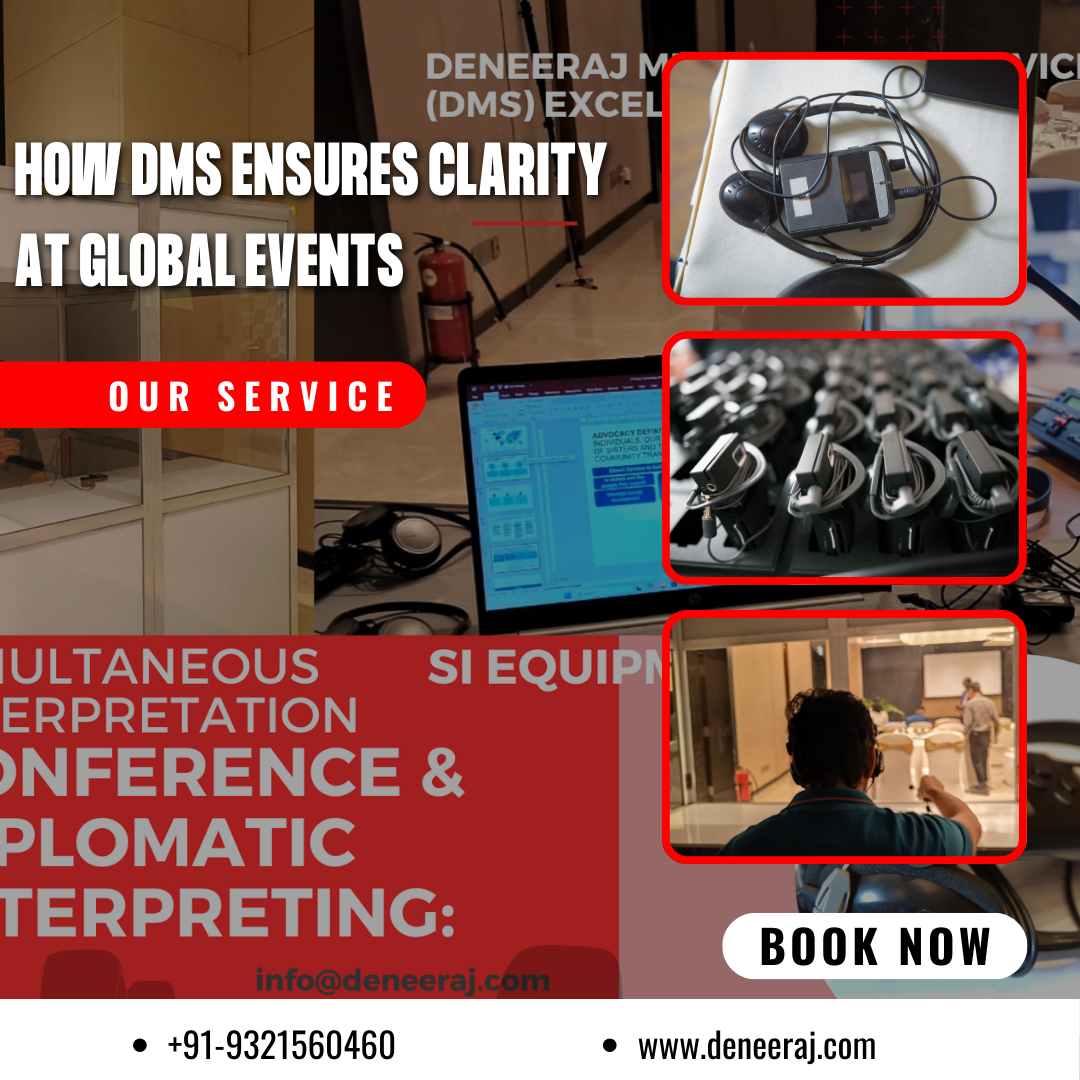
Two techniques, one goal — clear communication without barriers
Both simultaneous and consecutive interpretation play essential roles in global communication. Although the techniques differ significantly in structure, speed, equipment requirements, and communication style, the ultimate objective remains the same: clear, accurate, seamless, and professional multilingual communication. In a world where international collaboration continues growing rapidly, interpretation services are no longer optional luxuries. They are essential communication tools that enable people from different linguistic and cultural backgrounds to connect, collaborate, learn, negotiate, and grow together effectively.
At DMS, the philosophy remains clear:
when communication becomes clear, people do not simply understand each other better — they collaborate better, connect better, and create stronger global relationships without language barriers.
Professional Translation Services | Human Translation Services in India I Remote Phone Interpretation Services I Voice Over & Dubbing Company India