
- 14
- Dec
Managing Complex Heritage Language Projects with Precision
Working with heritage and historical texts requires far more than linguistic fluency. It is a specialised discipline that brings together academic rigour, cultural awareness, and carefully structured workflows. Over time, extensive work has been undertaken across classical, transitional, and modern languages, engaging with content that is philosophical, ritualistic, historical, and literary in nature. Texts written in Sanskrit, Persian, Urdu, Arabic, Hindi, Marathi, and other legacy or regional scripts often assume familiarity with intellectual traditions and symbolic frameworks. Such material cannot be approached as standard translation. It demands interpretive depth, grounded in both language expertise and contextual understanding.
Why Historical Manuscripts Require a Different Approach
Unlike contemporary documents, historical manuscripts are often handwritten, composed in evolving orthographies, and shaped by the linguistic conventions of their time. Many texts move fluidly between prose, verse, commentary, and instruction. To work with them effectively, linguists must engage not only with vocabulary, but with the systems of thought that inform the text. This complexity is especially evident in philosophical and scriptural literature such as the Upanishads and works like the Taittirīya Āraṇyaka, where meaning is layered and symbolic. Translation here is never mechanical. It requires familiarity with philosophical traditions, ritual terminology, and established interpretive frameworks.
Source Analysis and Accurate Transcription
Every manuscript project begins with careful source analysis. Scripts, handwriting styles, historical context, and textual condition are studied before transcription begins. This foundational stage ensures that the integrity of the original manuscript is respected and preserved. Transcription is carried out with precision, maintaining the original sequence, structure, and linguistic markers. Accuracy at this stage is critical, as even minor deviations can affect interpretation in later phases.
Interpretation as a Scholarly Process
Once transcription is complete, the work moves into interpretation. Archaic grammar, compressed phrasing, and culturally embedded references are examined in depth. Scholars consult traditional commentaries, parallel texts, and reference materials to ensure that interpretation aligns with accepted understanding rather than modern assumption. This stage is particularly important for classical languages, where meaning often depends on context, usage, and tradition rather than literal phrasing.
Context-Aware Translation and Language Normalisation
Translation follows as a context-aware process, balancing fidelity to the original text with clarity for contemporary audiences. The objective is not simplification, but intelligent normalisation—making the content readable without stripping it of nuance. Terminology is handled consistently, metaphors are respected, and culturally specific expressions are translated with care, ensuring that the original intent and depth remain intact.
Structuring Content for Modern Systems
Many heritage-language projects require translated content to be structured for digital and institutional use. This involves organising material into databases, spreadsheets, or archival systems while maintaining clear traceability to the source manuscript. Such structuring enables long-term preservation, academic research, and scalable access, without compromising authenticity.
Quality Assurance Rooted in Expertise
Quality assurance in heritage-language work goes beyond proofreading. It involves scholarly validation, contextual review, and terminological consistency checks. Senior linguists and subject-matter experts examine sensitive sections to ensure accuracy of meaning, tone, and intent. This layered review process safeguards both linguistic precision and intellectual integrity.
Working Across Languages and Traditions
The same disciplined methodology applies whether engaging with Sanskrit philosophical texts, Persian historical manuscripts, Urdu literary works, or multilingual archival collections. Experience across diverse language families strengthens interpretive judgement and ensures culturally responsible handling of content.
Preserving Knowledge for Future Generations
At its core, heritage-language work is about continuity. When executed responsibly, historical manuscripts evolve from fragile records into living knowledge resources, accessible to scholars, educators, and future generations without losing their original dignity or depth.
A Trusted Global Language Partner
DEneeraj Multi-lingual Services® (DMS) proudly serves over 100 global clients, including corporates, governments, NGOs, and media organisations. Whether the requirement is translation, localisation, interpretation, or transcreation, DMS ensures every message is clear, culturally relevant, and professionally delivered—every time.
Translation vs Localisation I Why the Difference Matters More Than You Think I Transcription & Transliteration Services I Interpretation
Localisation adjusts:
- Tone and conversational style
- Currency, measurements, and time/date formats
- Cultural references, festivals, humour, and metaphors
- Images, colours, and visual symbols
- User expectations and reading habits
This is especially important in content meant to persuade, influence, or emotionally resonate, such as:
Why Does This Difference Matter?
Cultural Sensitivity Builds Trust
When your message sounds robotic or foreign, even if it’s accurate, it can feel disconnected. Localisation removes that distance. It uses familiar expressions, relevant references, and culturally preferred formats—making your audience feel that the content was created for them, not just converted for them.
 Better Engagement and User Experience
Localised content tends to perform better across the board. People stay longer on your website, respond more to your campaigns, and feel more comfortable learning or buying from you. Because it feels natural, the content is easier to absorb and more persuasive.
Consistency with Brand Identity
If you’re building a brand voice—whether friendly, formal, playful, or professional—localisation helps you maintain that tone across languages. A simple translation may not be able to reflect your brand personality in different markets, but localisation ensures it’s preserved, adapted, and understood.
Reaching the Right Emotion, Not Just the Right Word
Humour, emotion, and cultural nuance are often lost in literal translation. A tagline that works in English may sound confusing or awkward in another language. Localisation reimagines your content to ensure that it triggers the same emotional response in a new language as it did in the original.
So, Which One Do You Need?
If your goal is to share factual, legal, or instructional information with high accuracy and formality, translation is likely enough. But if your content is meant to market, teach, influence, inspire, or entertain, then localisation is essential. It allows your message to feel native, not foreign—and that’s what builds real connection.
What Makes DMS Different?
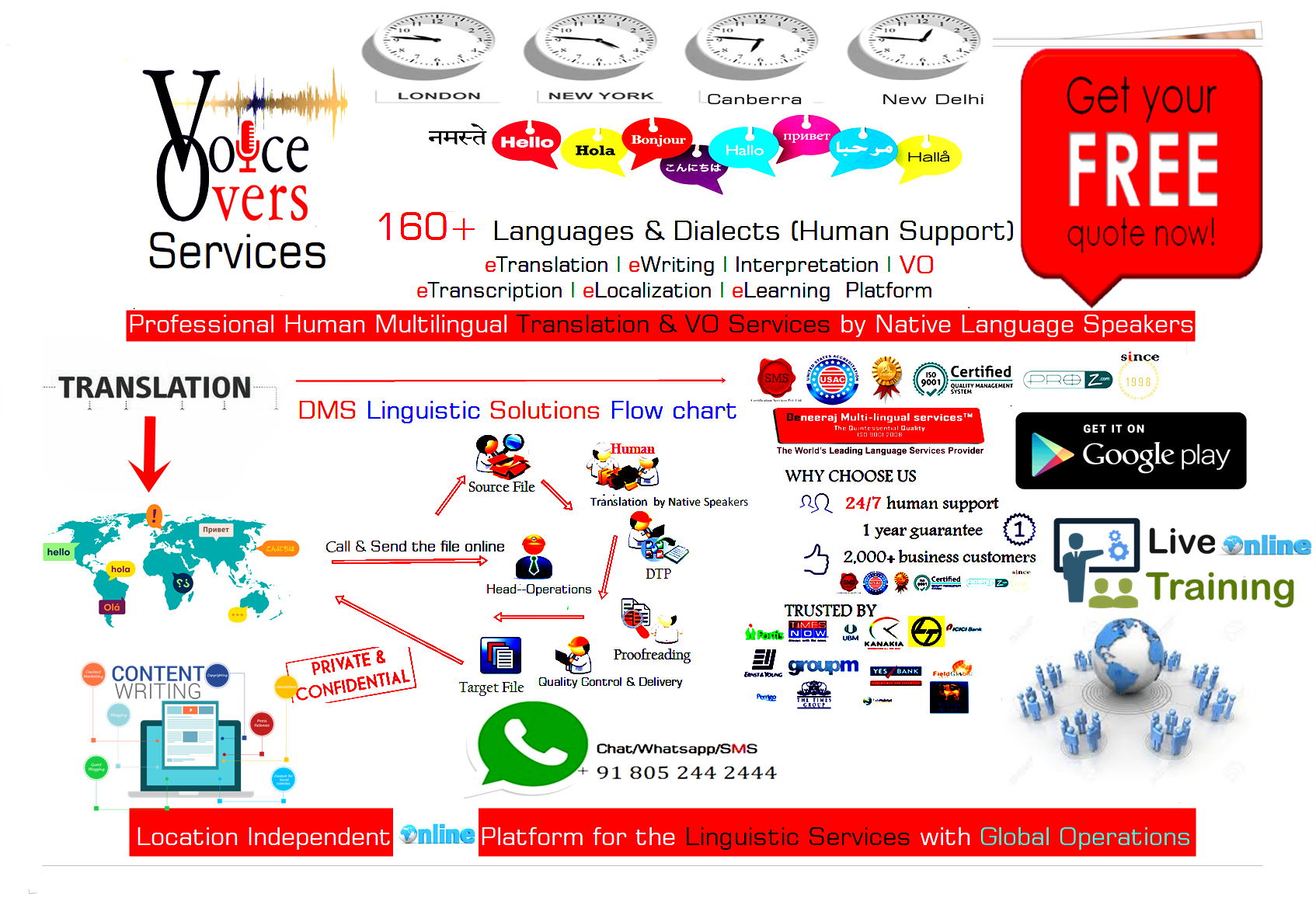
At DEneeraj Multi-lingual Services® (DMS), we understand that language is more than just words. It’s context, tone, feeling, identity, and culture. That’s why we provide end-to-end language solutions that combine translation accuracy with localisation expertise.
Our multilingual services include:
- Translation & Localisation Services
- Transcription & Transliteration Solution
- Onsite & Remote Interpretation
- Review, Proofreading & Editing
- Website & Software Localisation
- Transcreation, Typesetting, and DTP
- Improvement of Existing Translations
We proudly serve over 100 global clients, including corporates, governments, NGOs, and media companies. Whether you need to translate, localise, interpret, or transcreate, DMS ensures your message is clear, culturally relevant, and professionally delivered—every time.
Ready to Take Your Message Global?
Whether you’re launching a new course, expanding into international markets, or creating a multilingual app or campaign—don’t just translate. Localise.
Get in touch with DEneeraj Multi-lingual Services® (DMS) today for a FREE consultation or quote. Let us help you speak to the world—not just in their language, but in their voice.